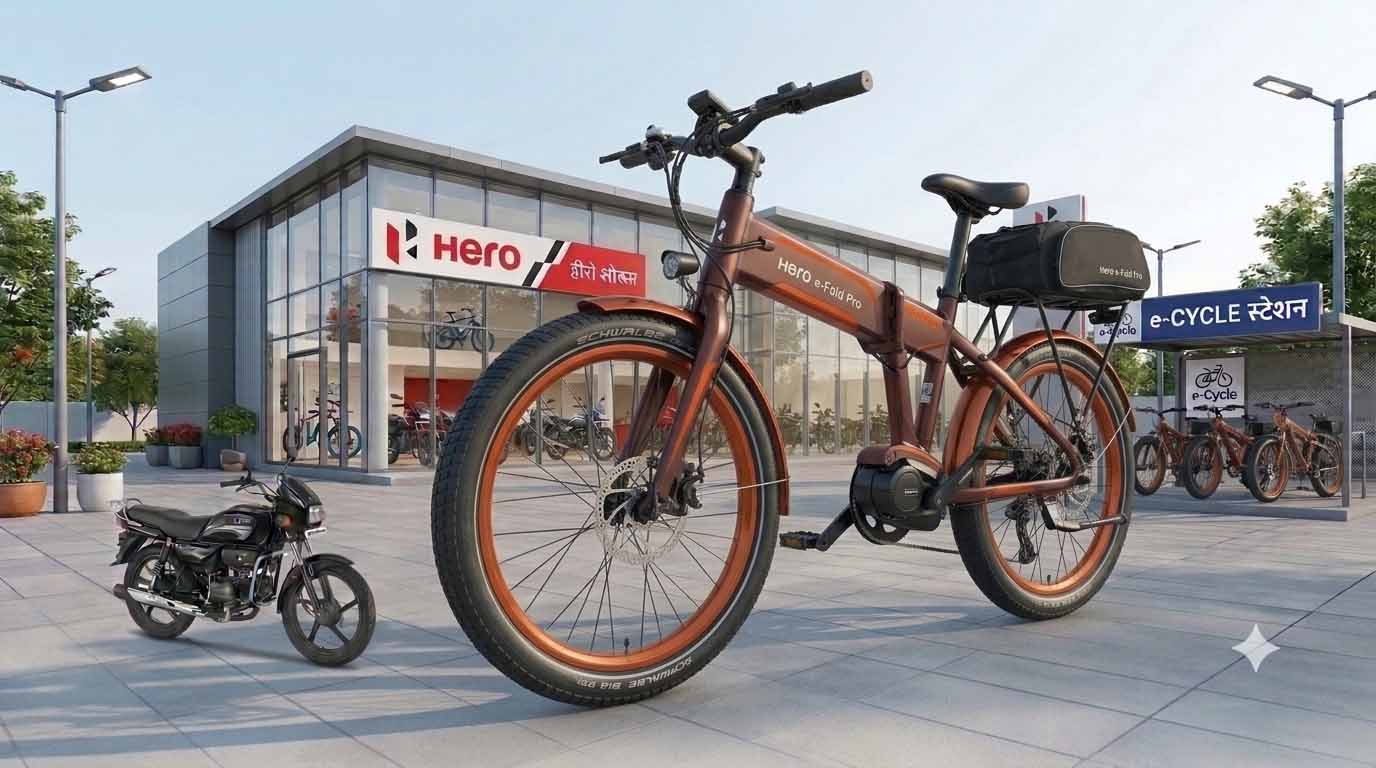
Electric cycles are becoming an attractive transportation option for students, working professionals, and families looking for affordable ways to travel short distances. They combine traditional cycling with electric assistance, helping riders travel with less physical effort. In 2026, many people are searching for electric cycle offers, government subsidies, online registration, and schemes that may reduce the cost of purchasing an e-cycle.
However, it is important to understand that an advertisement for a free electric cycle does not necessarily represent an official government scheme. Benefits depend on the state, programme, manufacturer, eligible model, and availability of incentives. Applicants should verify the latest information before submitting personal details or making payments.
What Is the Electric Cycle Offer 2026?
The term “Electric Cycle Offer 2026” can refer to different types of promotions. These may include discounts from manufacturers, special prices offered by authorised dealers, exchange offers, or government-supported incentives where applicable.
An electric cycle generally uses a rechargeable battery and an electric motor to assist the rider. Depending on the design, it can make daily commuting easier and reduce the physical effort required on longer routes. Some models are suitable for students and local travel, while others are designed for longer journeys or carrying goods.
There is no basis for assuming that every Indian citizen can receive a completely free electric cycle in 2026. Anyone interested in an offer should first confirm the name of the sponsoring organisation, the official announcement, the application dates, and the conditions attached to the benefit.
A genuine programme should clearly explain whether it provides a free product, a partial subsidy, a purchase discount, or financial assistance. Understanding this difference helps applicants avoid misleading claims.
Eligibility Criteria for Electric Cycle Benefits
Eligibility varies according to the specific offer. A private company may provide a discount to customers purchasing a particular model, while a government programme may have separate requirements concerning location, vehicle specifications, and applicant details.
For a commercial offer, customers may need to purchase an eligible product during a promotional period or visit an authorised dealership. Some discounts may be limited to selected models or locations.
For a government incentive, applicants should check the official programme guidelines rather than relying on general social media posts. The rules may specify which vehicle categories qualify, whether the model must meet technical standards, and whether the benefit is still available.
Before applying, check the following points:
- Whether an official scheme or offer is active in 2026.
- Whether electric cycles are included in the programme.
- Whether the offer is available in your state or city.
- Whether any age, residence, income, or student-status conditions apply.
- Whether a particular model or battery type is required.
- Whether applications are open and incentives remain available.
- Whether the benefit is a discount, subsidy, or completely free product.
Meeting some conditions does not guarantee approval. Applicants must satisfy all the relevant requirements published by the organisation responsible for the scheme.
Benefits of Purchasing an Electric Cycle
Electric cycles can provide several practical advantages for everyday transportation. One of the main benefits is motor assistance, which helps riders travel with less effort than they might need on a conventional bicycle.
They can be useful for commuting to educational institutions, workplaces, nearby markets, and other local destinations. For people who regularly make short trips, an e-cycle may offer a convenient alternative to using a fuel-powered vehicle.
Another advantage is the potential to reduce routine transportation expenses. Electric cycles do not use petrol or diesel, and charging costs are generally lower than the fuel costs associated with motor vehicles. Actual savings depend on the purchase price, electricity tariff, battery life, maintenance, and frequency of use.
Electric cycles can also support environmentally conscious transportation because they have no tailpipe emissions during use. Their overall environmental impact still depends on factors such as electricity generation, battery production, and battery disposal.
Riders should remember that an electric cycle requires regular maintenance. Brakes, tyres, lights, the battery, and electrical components should be checked according to the manufacturer’s recommendations. Choosing a suitable model and maintaining it properly can improve reliability and everyday usability.
Government Electric Cycle Subsidy and Scheme Information
People searching for an electric cycle subsidy should distinguish between schemes supporting electric bicycles and programmes supporting electric scooters or other electric vehicles.
The Indian government’s PM E-DRIVE programme has provided incentives for specified electric vehicle categories under defined conditions. However, the inclusion of electric two-wheelers in a government scheme does not automatically mean that every electric cycle qualifies. Applicants should check the latest rules and eligible vehicle categories on the official portal before expecting a subsidy.
Some state-level policies may have separate provisions for electric cycles. For example, Delhi’s official electric vehicle policy website has published information about e-cycle incentives, including model and programme conditions. Such information should not be interpreted as proof that the same benefit is available throughout India or that every offer remains open in 2026.
The amount and availability of any incentive can depend on the relevant policy, eligible model, funding limits, and application period. Buyers should ask an authorised dealer to confirm whether a particular cycle qualifies and how the incentive is applied.
For general government-scheme discovery, applicants can also visit the official myScheme platform and review the programmes relevant to their location and circumstances.
Documents Required for an Online Application
The documents required depend on the organisation providing the offer. A commercial discount may require only basic purchase information, while a government-supported incentive may require additional documents.
Depending on the published rules, applicants might need:
- Proof of identity, if required.
- Proof of residence, where location-based eligibility applies.
- Age proof, if an age condition is specified.
- Student identification, if a programme specifically targets students.
- A purchase invoice or receipt, where required.
- Details of the electric cycle model and seller.
- Bank account information, if an authorised reimbursement process requires it.
- A valid mobile number or email address for communication.
This is a general list, not a universal document requirement. Applicants should follow the exact checklist on the official website and avoid sharing unnecessary personal information.
Before uploading a document, check that the website belongs to the responsible government department, manufacturer, or authorised organisation. Never provide passwords, banking PINs, or one-time passwords to someone claiming to approve a benefit.
How to Apply for an Electric Cycle Offer Online
The application process depends on whether the offer comes from a government department, manufacturer, or authorised dealer. The following steps provide a general approach.
Step 1: Find the official source. Search for the programme on the relevant government department’s website or the manufacturer’s official website. Confirm that the offer is genuine and active in 2026.
Step 2: Read the eligibility requirements. Check the eligible vehicle category, location, applicant conditions, application deadline, and available benefit. Confirm whether the programme offers a free cycle or only a price reduction.
Step 3: Check the eligible models. If the programme applies only to selected models, compare the cycle’s specifications with the published list. Ask an authorised dealer for confirmation where necessary.
Step 4: Prepare the required documents. Gather only the documents mentioned in the official instructions. Make sure that the information is accurate and consistent.
Step 5: Complete the application. If an official online form is available, fill it out carefully and review the details before submission. If the offer is available through a dealer, ask for the written terms and final price.
Step 6: Save the acknowledgement. Keep the application reference number, receipt, or confirmation message if one is provided.
Step 7: Check the status. Use the official tracking facility, if available, or contact the organisation through its published support details. Wait for confirmation before assuming that the benefit has been approved.
Not every offer uses an online application form. Some discounts are applied directly at the point of purchase, while other programmes may have different procedures.
How to Choose the Right Electric Cycle
Choosing the right electric cycle requires more than comparing advertised prices. Buyers should consider their daily travel distance, road conditions, charging facilities, comfort, and access to servicing.
Battery capacity and motor specifications can influence performance, but the advertised range may differ from actual results. Rider weight, terrain, weather, tyre pressure, and assistance settings can all affect how far the cycle travels on a charge.
Check the charging time, battery warranty, motor warranty, brake quality, frame design, lighting, and availability of replacement parts. It is also useful to confirm whether the seller provides after-sales service in your area.
Compare the final price rather than relying only on a headline discount. Ask whether delivery, accessories, or other charges apply. Read the warranty terms and return policy before making a purchase.
A cycle that matches your travel needs and has dependable service support may offer better long-term value than a model selected solely because it is advertised at a lower price.
Important Tips to Avoid Fake Electric Cycle Schemes
Online advertisements sometimes use phrases such as “free electric cycle for everyone” or “government registration open” to attract attention. Such claims should be verified before anyone submits information or makes a payment.
Check whether the announcement appears on an official government website or a verified manufacturer page. Look for clear eligibility conditions, application dates, contact details, and written terms.
Be cautious of websites demanding unexpected registration fees or promising guaranteed approval without checking eligibility. A logo or government-related image does not establish that an offer is genuine.
Do not share an OTP, password, or banking PIN with a person claiming to process an application. If a payment is required for a legitimate purchase, confirm the seller’s identity and obtain a proper receipt.
When information is unclear, contact the responsible department or authorised dealer independently instead of relying on forwarded messages.
Frequently Asked Questions
Is a free electric cycle available to everyone in 2026?
No universal free-cycle benefit should be assumed. Availability depends on an officially announced programme or genuine commercial promotion and its specific eligibility conditions.
Can students receive an electric cycle?
Students may qualify if a particular programme includes them and they meet its requirements. Student status alone does not guarantee a free electric cycle.
Can I apply online using a mobile phone?
Yes, if the responsible organisation provides an official online application facility. Follow the published instructions and verify the website before submitting information.
Does the PM E-DRIVE scheme cover every electric cycle?
No. Eligibility depends on the vehicle categories and conditions specified under the scheme. Confirm the latest official rules before expecting an incentive.
How can I check whether an offer is genuine?
Verify the announcement through the relevant government department, official scheme portal, manufacturer, or authorised dealer. Avoid making payments based only on social media claims.
Conclusion
The Electric Cycle Offer 2026 is a useful topic for people exploring affordable transportation, electric mobility, and possible purchase incentives. Electric cycles can help make short journeys convenient while potentially reducing routine travel costs.
However, applicants should understand the difference between a free-cycle scheme, a commercial discount, and a government subsidy. Eligibility, documents, application procedures, and benefits depend on the actual programme and the applicant’s location.
Before applying, check official announcements, confirm eligible models, review the complete terms, and avoid unverified registration fees. Careful research can help buyers identify genuine offers and choose an electric cycle that suits their needs and budget.